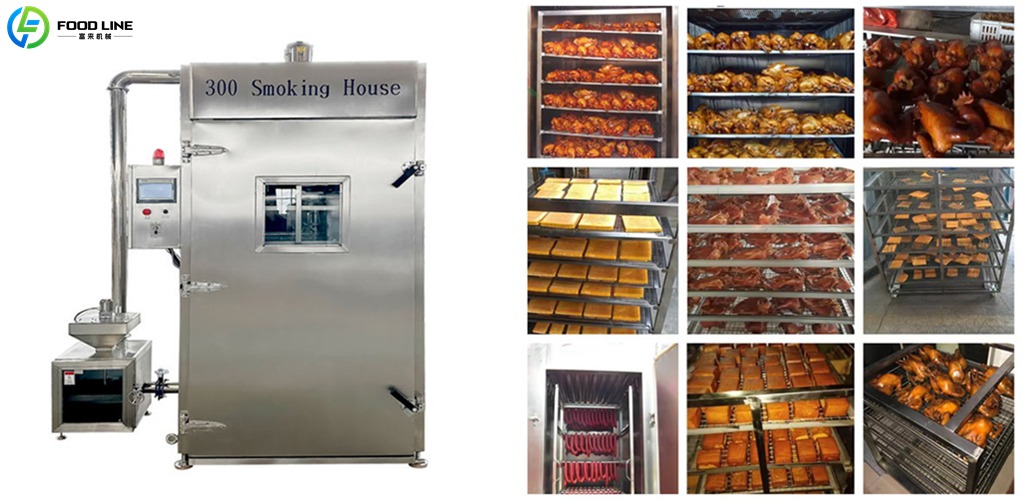
Smoking is a specialized method of processing meat. Commercial smokehouses facilitate the smoking, drying, cooking, and coloring of food in a controlled environment, enabling precise control over the product’s flavor and texture. Contact us for factory-direct pricing! WhatsApp/Phone: +86 13838385752.
Parameters of Smokehouse Equipment
Model
Length (cm)
Width (cm)
Height (cm)
Power (kW)
250 Regular (6 Layers)
200
130
290
34
300 Regular (6 Layers)
200
220
250
50
500 Regular (6 Layers)
210
250
290
58
750 Regular (6 Layers)
210
350
290
73
1000 Regular (6 Layers)
210
460
290
100
Factory Prices! WhatsApp/Phone: +86 13838385752.
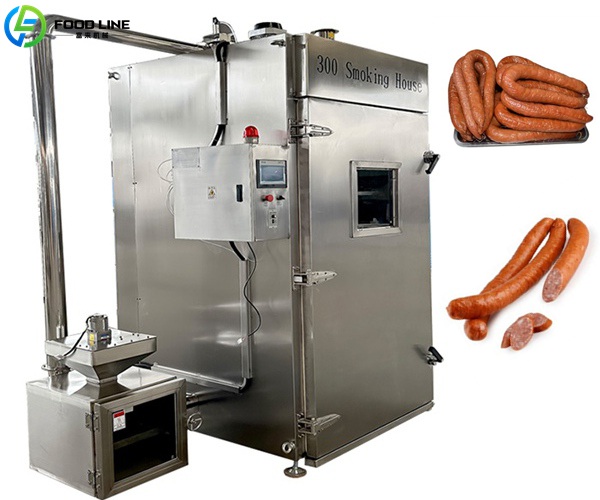
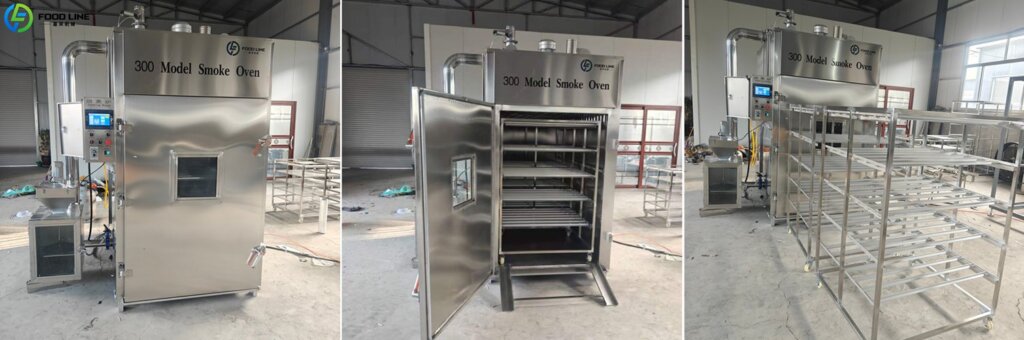
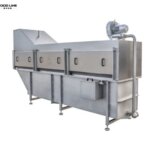
300 smokehouse device
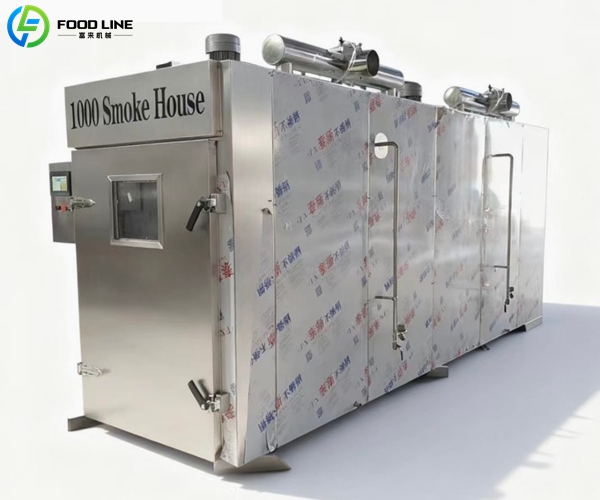
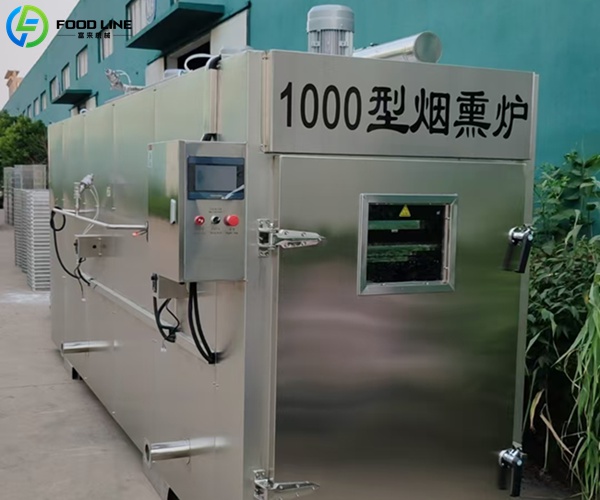
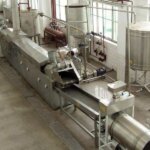
1000 smokehouse device
What is a Commercial Smokehouse
A commercial smokehouse is a piece of thermal processing equipment that utilizes controlled smoke, temperature, humidity, and airflow to process food products. It is used in the processing of meat, poultry, fish, and plant-based foods.
The smokehouse comprises three key components: the oven body, the control cabinet, and the smoke generator.
Step 1: Smoke Generation and Transport
The smoke box heats smoking materials—such as apple wood chips, oak chips, or sugar—to generate aromatic smoke. A flue then conveys this smoke into the main processing chamber. The equipment utilizes an external smoke generation system.
Step 2: Air Circulation System
A fan and a copper coil heat exchanger are installed at the top of the smokehouse. The fan circulates hot air and smoke, while the copper coils facilitate heat transfer. During drying or steaming stages, steam enters through a dedicated inlet and flows through the copper coils.
Step 3: Smoking and Heat Treatment
Inside the smokehouse, smoke, heat, and humidity work together to complete the processing. Heat is used for cooking and sterilization. Smoke imparts a distinctive flavor and color to the food. Airflow regulates the degree of drying and moisture balance.
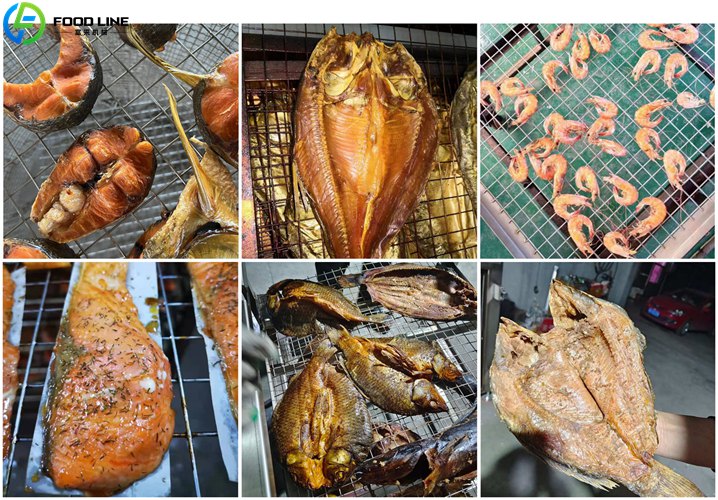
Cold smoking is a time-consuming process, typically lasting 4 to 7 days. It allows smoke compounds to penetrate deep into the food, resulting in deep flavor infusion. The low-temperature processing leads to higher concentrations of salt and smoke compounds. It is commonly used for smoked salmon and dry-cured sausages.
Hot Smoking (35°C–110°C)
Hot smoking is more commonly used in production. Processing times are shorter in the 35–50°C range, typically lasting 12–48 hours. The 60–110°C range combines cooking and smoking. Key characteristics include a faster production cycle, protein coagulation that forms a sealed surface layer, and a milder flavor profile.
Apple, cherry, and oak wood chips produce a rich aroma. This is the most traditional method, frequently used for meat and fish products.
Sugar Smoking
Sugar-based smoking materials burn rapidly, giving the product a golden-yellow surface. The resulting flavor is sweet, making this method popular for processing snacks such as chicken wings, tofu, and nuts.
Liquid Smoke
The smokehouse equipment utilizes liquid smoke in two ways: it heats the liquid to create a vapor or applies it directly to the food through spraying or mixing.
Why Choose Foodline
We are a supplier specializing in food machinery, providing durable equipment for sectors such as meat, seafood, vegetable processing, and packaging. Whether for small businesses or large-scale factories, our team can customize equipment to meet specific processing requirements. Our smokehouses are frequently used in sausage production lines, and all our equipment undergoes rigorous testing before leaving the factory. Contact us for a specific quote! WhatsApp/Phone: +86 13838385752.
We use cookies to ensure that we give you the best experience on our website. If you continue to use this site we will assume that you are happy with it.